Moulds for thermoplastic composites: stamp forming and overmoulding in a single step
We design and build the tooling that stamp-forms an organosheet or thermoplastic laminate and immediately overmoulds it to add ribs, fastenings and inserts. High-temperature moulds with controlled thermal behaviour and dimensions.
Stamp forming and overmoulding: how it works
- 01
Heating
The thermoplastic laminate is heated above its melting temperature.
- 02
Transfer
A robot places it in the mould on the injection press, together with the inserts.
- 03
Stamp forming
Closing the mould forms the laminate.
- 04
Overmoulding
The injected polymer forms the ribs and bonds with the composite and metal inserts, in the same cycle.
The result: light, stiff parts with built-in functions in a single cycle, without assembly or bonding. The process runs in one step (stamp forming followed directly by overmoulding) or in two steps.
What a composite mould demands
High-temperature thermal control
Cartridge and oil heating, cooled and insulated rear plate, careful interface design to keep the temperature uniform.
Dimensional stability
Hot-work tool steel, thermal expansion taken into account from the design stage, compensation of shrinkage and spring-in (angle closure on cooling).
Segmented tooling
Moulding elements split into several sections and held securely in place under high injection pressure.
Inserts and reinforcements
Integration of metal and composite inserts, cold-runner injection through the laminate.
High-performance materials
Experience with carbon-fibre laminates and engineering polymers such as PEEK and LM-PAEK.
Precision and inspection
Precision machining and fitting in our workshops, dimensional inspection on coordinate measuring machines.
The demonstrator for TPRC, the Dutch research centre
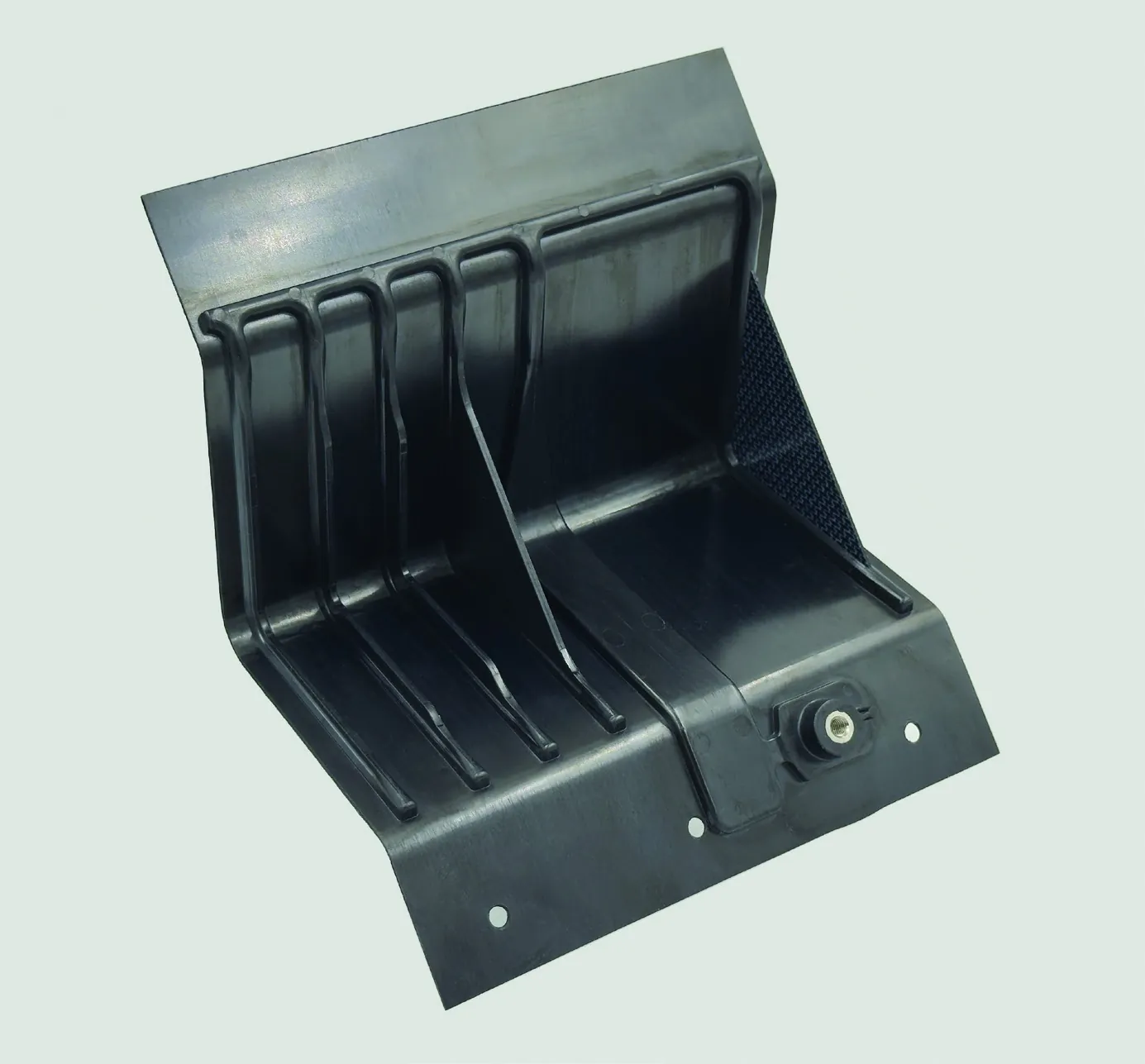
The ThermoPlastic Composites Research Center (TPRC, the Netherlands), on the recommendation of Solvay (now Syensqo), entrusted Pernoud with designing and building the mould for a demonstrator combining stamp forming and overmoulding of thermoplastic composites.
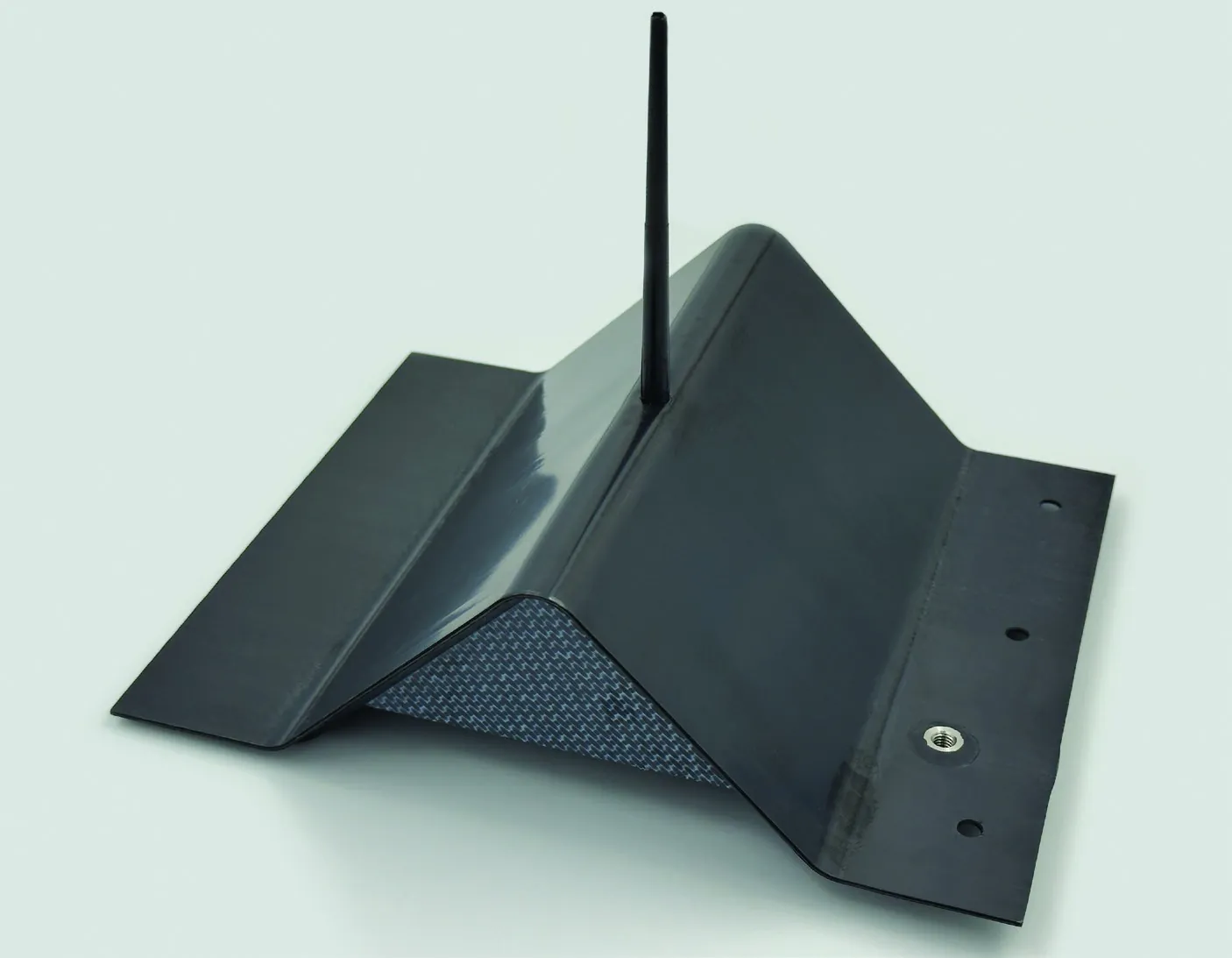
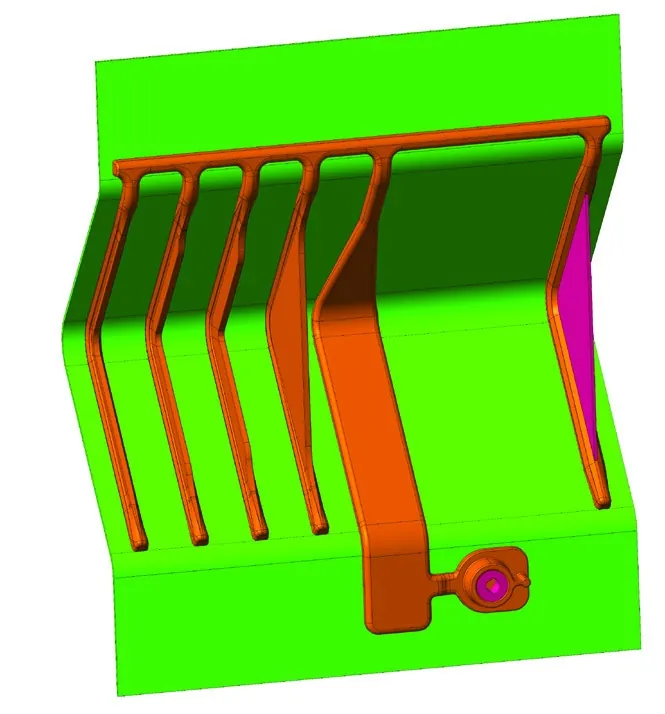
The V-shaped part has four ribs, a flat section, a metal insert and a composite insert. It combines a laminate of Toray T700G/TC1225 unidirectional carbon tape with PEEK filled with 40% short carbon fibres (Victrex 90HMF40). The mould runs on a KraussMaffei KM 160 CX 750 press with robotic transfer, in one or two steps, and lets TPRC compare physical tests with numerical simulation.
Our R&D, design, project management and sales teams followed the trials on site, through to the final adjustments to ease demoulding and high-pressure filling.
Source: JEC Composites Magazine No. 171, November–December 2026, “Tooling at the heart of thermoplastic composite overmoulding”.
The demonstrator in figures
- 4 overmoulded ribs
- 1 metal insert + 1 composite insert
- PEEK with 40% carbon fibre
- 1-step or 2-step cycle
- KraussMaffei KM 160 CX 750 press + robot
Where these parts make the difference
Aerospace
Lightweight structural parts and brackets.
Defence and air mobility
Drones and new aircraft.
Electric vehicles
Batteries, structures, electric motorbikes and e-bikes.
Sport and industry
Racing bikes, turbines and fans.
Composite moulds: your questions
What is stamp forming and overmoulding of thermoplastic composites?
A process that forms a heated thermoplastic laminate (stamp forming), then injects a polymer into the same mould to add ribs, fastenings and inserts (overmoulding), in one or two steps.
Which materials do you work with?
Carbon or glass fibre laminates and organosheets, and engineering polymers up to high-performance grades such as PEEK and LM-PAEK.
Have you built this type of mould before?
Yes. This type of tooling is now routine in our workshops; in particular, we designed and built the mould for the TPRC demonstrator in the Netherlands, featured in JEC Composites Magazine.
Can you support us from the part design stage?
Yes. Our approved R&D centre works on co-design: part-process feasibility, mould thermal design and deformation compensation.
A mould, a part to machine, a tool to take over?
Send us your drawing or STEP file: reply within 72 hours.